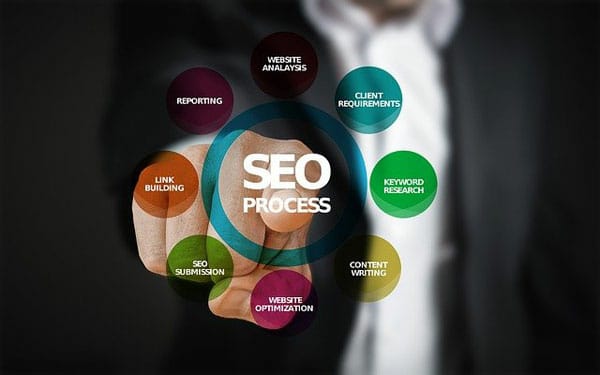
The harsh reality of the major search engines is that, if your site is not ranking on the first page, for your chosen keyword(s), then it might as well not exist.
There have been countless surveys and studies that have shown that close to 75% of all web searchers, never go past the first page of the search engine listings, that’s why it’s so important your page rank within page 1.
There are a number of techniques and strategies that you can adopt to give your site a leg up in the major search engines, but if you fail on the basics, such as on-page SEO, then your chances of getting your site to the first page will be seriously limited.
By adopting and adhering to the best practices for SEO, you will be laying down the appropriate groundwork that will see your site rank as high as possible in the search engines. Once you have all the basics in place, then you can focus on more advanced things, such as link building methods and keyword research.
In this particular article, we will be going over 4 of the best SEO practices that you’ll want to follow, if you want to rank at the top of the search engines.
1. Write Enticing Title Tags and Meta Descriptions
Both your Meta description and the title tag for the page, are amongst the most important elements of your page. So let’s take a look at the title tag first.
Title Tags
The title tag is basically the headline, which the end user will click on in the search engine to go through to your page. This makes them very important to your SEO efforts.
Google has stated that the title is one of the most critical elements to giving the end user a quick insight into your content from the search engine itself. Oftentimes people will use that title to determine whether or not they’ll click on the page, so it’s very important that you go with one that makes sense to the keyword its ranking on.
Of the major search engines, Google will usually show anywhere from 50 to 60 characters of a title. So, you’ll want to keep your title within 60 characters, so that it’s shown in full within the search engine listings.
Below are some best practices that you should keep in mind, when writing titles for your content:
- Make sure your title matches the intent of the searcher.
- Include your main target keyword in the title.
- Make sure you do not overdo it with keyword stuffing.
- Every title on your site should be unique.
- Go with a descriptive yet concise title.
Meta Descriptions
The next tag, is the Meta description, which is equally as important. If you don’t know what the Meta description is, well, it’s essentially the piece of writing that appears under the title, within a search engines listings.
Your Meta descriptions will not have any impact on where your page ranks within the search engines, however, they will influence your click-through rate.
Google explains it as, a Meta description should be engineered to inform and generate interest, with a relevant, yet short summary for that particular page. You want your Meta description to act as a pitch, to convince the end user that the page has everything they’re looking for.
Google’s limit for Meta descriptions is around 160 characters, so you’ll want to keep it under that. So that it appears in full when ranking in the search engines.
Below are a number of best practices you’ll want to follow when constructing your Meta descriptions:
- Include your main keyword in the description.
- Make sure it’s accurate and concise.
- Your Meta description should match search intent.
- Implement a call-to-action within the copy.
- Each page on your site should have a unique Meta description.
2. Optimize Your Images
Site speed has become increasingly more important over the years. So naturally you’d want your pages to load as quickly as possible. One way you can do that is through the optimisation of your images.
If you use Google Lighthouse, it will scan your site and tell you which images may be slowing your site down. There are also optimisation services such as Ezgif and Bulk Resize Photos that will help reduce the size of your images. Additionally, there are CMSs which you can use, they come with optimisation features which allow you to edit your posts directly.
To get around having to later trim your image’s down, in terms of size. You’ll want to adopt image optimisation as one of your best practices. That way, you’re already creating images that look the best at the smallest possible file size.
One thing to note is that Google specifically, is thinking about user experience when ranking pages. This means, if your competitors pages loads content faster than yours, especially on a mobile device, then Google is going to rank the faster content higher.
There’s also accessibility for you to consider. A lot of end users like to use screen reader technology, in order to make navigating the web that much easier for themselves. You want all the major search engines to know that you support such technology on your site.
So, do whatever is in your power to limit the size of your images, and add alt text to them (which is similar to a Meta description only for your images), this will give you additional SEO brownie points.
3. Audit Your Backlinks
A backlink is basically a link pointing to your website from another website. Backlinks are an essential component of a site’s SEO. A backlink lets the major search engines know that your website has value. However, if the sites linking to your site are of low quality, then it can potentially hurt your rankings in the search engines. One way around this, is to disavow any low grade links. To do this, you will need to perform an audit. This means, going through all the different links, both bad and good, and disavowing the bad ones. Link building can make or break your website.
4. Build Links
One of the most effective ways to improve your rankings is to build links to your site from local businesses. On the surface it may not sound like the best idea, but it is. You don’t want to link to direct competitors of course, but you do want links from businesses and sites that are in the same line of work. You can start by maybe linking to their site and leaving a comment, asking for them to reciprocate. Or you could simply send them an email.
—AUTHOR INFO—
Uchenna Ani-Okoye is a former IT Manager who now runs his own computer support website https://www.compuchenna.co.uk.


